English| EUR
Suggested for you
More currencies
Choose a language
Beneath the cobblestone streets of Staré Město lies a network of medieval cellars, torture chambers, and forgotten dungeon passages that reveal Prague's darker past. This guided underground experience takes visitors 80 to 90 minutes through spaces sealed off from the public for centuries, offering a stark contrast to the sunlit squares above.
Quick answer
The Prague Old Town Medieval Underground & Dungeon History Tour operates daily from 10:30 to 20:00, with tours departing regularly throughout the day. The entrance fee is 650 CZK per person and includes guided access to subterranean chambers, medieval cellars, and preserved dungeon spaces. Arrive between 10:30 and 18:00 to avoid peak evening crowds and ensure you have sufficient time for the full 80–90 minute experience.
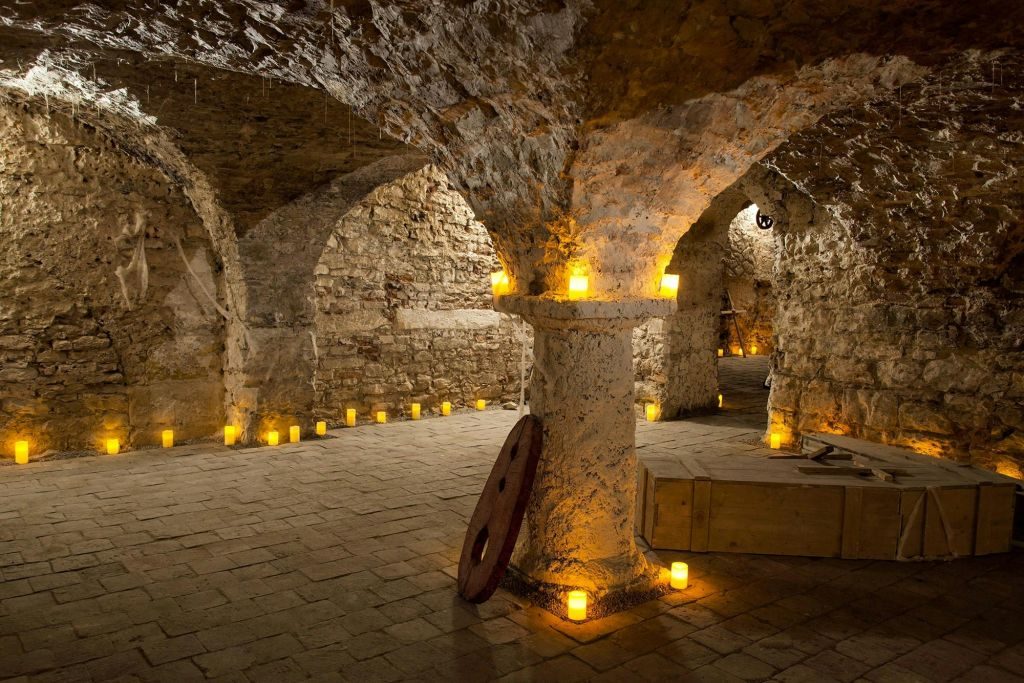
The Gothic cellars beneath Malé náměstí date to the 13th century, when Prague's street level was nearly three meters lower than it stands today. Successive floods and rebuilding efforts buried entire ground floors, transforming merchant storerooms and residential basements into the labyrinthine passages visitors navigate on the prague old town medieval underground & dungeon history tour. Stone staircases descend into chambers where temperature drops sharply and humidity clings to brick vaulted ceilings, preserving the atmosphere of medieval confinement. Guides lead groups through interconnected cellars that once served as ale storage, debtors' cells, and interrogation rooms. Iron rings embedded in sandstone walls anchor the narrative of imprisonment and punishment that defined justice in the Holy Roman Empire. The route connects three distinct underground systems, each representing a different era of construction and use, from Romanesque foundations to Baroque-era modifications. Narrow corridors require single-file passage in sections where ceiling height drops below standard doorway clearance. The tour departs from a 14th-century merchant house on Malé náměstí, steps from the astronomical clock and directly above the underground entrance. Groups are limited to ensure audibility in the stone chambers, where acoustic properties amplify whispers and footsteps. The experience concludes at street level near the original departure point, allowing visitors to immediately compare the preserved medieval architecture above ground with the buried layers below. Tours operate in multiple languages, with English and Czech departures scheduled throughout the day to accommodate international visitors researching Prague's subterranean heritage. Booking in advance through the official website secures a preferred time slot and avoids same-day availability issues during peak summer months and holiday weekends. The 650 CZK fee covers the full guided experience, including access to restricted areas not open for independent exploration. Visitors should wear sturdy footwear and bring a light jacket, as underground temperatures remain constant regardless of surface weather conditions. The medieval underground tour provides context that reshapes how visitors understand the visible city above, connecting street-level landmarks to the hidden infrastructure that sustained them for seven centuries.
“Stone staircases descend into chambers where temperature drops sharply and humidity clings to brick vaulted ceilings, preserving the atmosphere of medieval confinement.”
The best arrival window for your visit is between 10:30 and 18:00. Arriving during this period helps you avoid peak evening crowds while ensuring you have sufficient time to complete the 80-90 minute guided experience.
—
Visiting on weekday mornings provides the most personal experience in the underground spaces.
Cool and mild, 10°C–16°C
These months offer a balance of manageable tourism numbers and comfortable temperatures.
Warm, 20°C–28°C
Arrive early in the day during summer months to navigate the tours comfortably.
Cold, 0°C–5°C
The underground remains a consistent temperature, making it a viable option during colder outdoor conditions.
Verdict: The optimal time for your visit is Tuesday to Thursday between 10:30 and 18:00, particularly during the shoulder months of April or October.
The Prague Old Town Medieval Underground & Dungeon History Tour operates daily to accommodate visitor schedules throughout the week.
The tour meeting point is located at Malé náměstí 459/11, situated in the heart of Prague's Old Town. The most efficient way to reach this central location is by utilizing the city's pedestrian-friendly public transit network.
Line A (Green) to Staroměstská station
Lines 2, 17, or 18 to Staroměstská stop
From Old Town Square (Staroměstské náměstí)
As the location is within a historic pedestrian zone, public transport is recommended over driving. Arriving at the meeting point 10 minutes before your scheduled slot ensures a prompt departure for your tour.
The Prague Underground tour follows a fixed 80-90 minute guided route through medieval chambers and dungeons beneath Old Town. Visitors move as a group with their guide, so the itinerary below reflects the typical tour sequence rather than independent exploration.
Meet your guide at Malé náměstí 459/11 in Old Town, a short walk from the Astronomical Clock. Arrive 10 minutes early for check-in.
Your guide leads you down stone staircases into the medieval cellars, explaining the layered history of Prague's buried streets and structures.
Walk through vaulted rooms that once served as storage cellars, workshops, and merchant quarters, with visible Romanesque and Gothic masonry.
Enter the dungeon area where prisoners were held; your guide describes medieval justice systems and the function of displayed instruments.
Reach the oldest sections, including 12th-century foundation walls and remnants of the original street level buried over centuries.
Ascend back to street level, where your guide answers questions and provides recommendations for nearby historical sites.
The underground chambers beneath Prague's Old Town trace their origins to the eleventh and twelfth centuries, when Romanesque and early Gothic cellars were excavated to support merchant houses and municipal buildings above ground. As successive floods—particularly the catastrophic inundation of 1432—deposited layers of sediment across the medieval settlement, street levels rose by as much as three meters. Ground floors became basements, and basements became forgotten vaults. By the fourteenth century, under Emperor Charles IV, Prague had expanded into one of Europe's largest cities, and these subterranean spaces served as storage for goods, workshops for craftsmen, and—in certain quarters—holding cells for debtors and minor offenders. During the Hussite Wars of the early fifteenth century, underground passages connected strategic points within the Old Town fortifications, allowing defenders to move unseen. The prague old town medieval underground & dungeon history tour reveals sections of these corridors, some still bearing chisel marks from medieval stonecutters. In the sixteenth and seventeenth centuries, plague outbreaks drove authorities to isolate the sick in below-ground chambers, and records from 1582 describe the use of vaulted cellars near Malé náměstí as temporary detention spaces during periods of civil unrest. Today, visitors descend through narrow staircases into Romanesque halls with barrel vaults and Gothic alcoves where iron rings and stone benches remain embedded in the walls. The tour navigates layered strata of construction, exposing the architectural palimpsest that defines Prague's medieval core. These chambers, once utilitarian and punitive, now offer direct physical contact with the city's stratified past.
Romanesque cellars excavated beneath merchant houses and municipal buildings in the Old Town settlement.
Emperor Charles IV founds the New Town, accelerating commercial expansion and underground construction.
Major flood deposits sediment across Prague, raising street levels and burying ground floors beneath new pavement.
Hussite Wars drive construction of underground passages connecting fortified points within Old Town defenses.
Municipal records document use of vaulted cellars near Malé náměstí as detention spaces during civil unrest.
Plague outbreaks prompt isolation of the sick in below-ground chambers; some spaces repurposed as storage after epidemics subside.
Everything you need to know about prague old town medieval underground & dungeon history tour
This guided experience provides access to subterranean chambers and historical dungeons beneath the city center. Visitors learn about the architectural layers of Old Town during this immersive prague old town medieval underground & dungeon history tour.
The entrance fee for this historical excursion is 650 CZK per person. This flat fee covers the complete guided tour of the underground and dungeon locations.
The guided visit typically lasts between 80 and 90 minutes. This timeframe allows sufficient opportunity to explore the various chambers and listen to the historical narration.
We recommend arriving between 10:30 and 18:00 to ensure a smoother experience. This specific arrival window helps guests avoid peak evening crowds while enjoying the full duration of the tour.
The tour is generally accessible for families interested in exploring the labyrinthine passages of the city. Parents should consider the nature of dungeon history and the duration of the walking tour when planning their visit.
The meeting point for the guided activity is at Malé náměstí 459/11, 110 00 Praha 1-Staré Město, Czechia. You can reach the site easily as it is situated centrally in the historical district.